
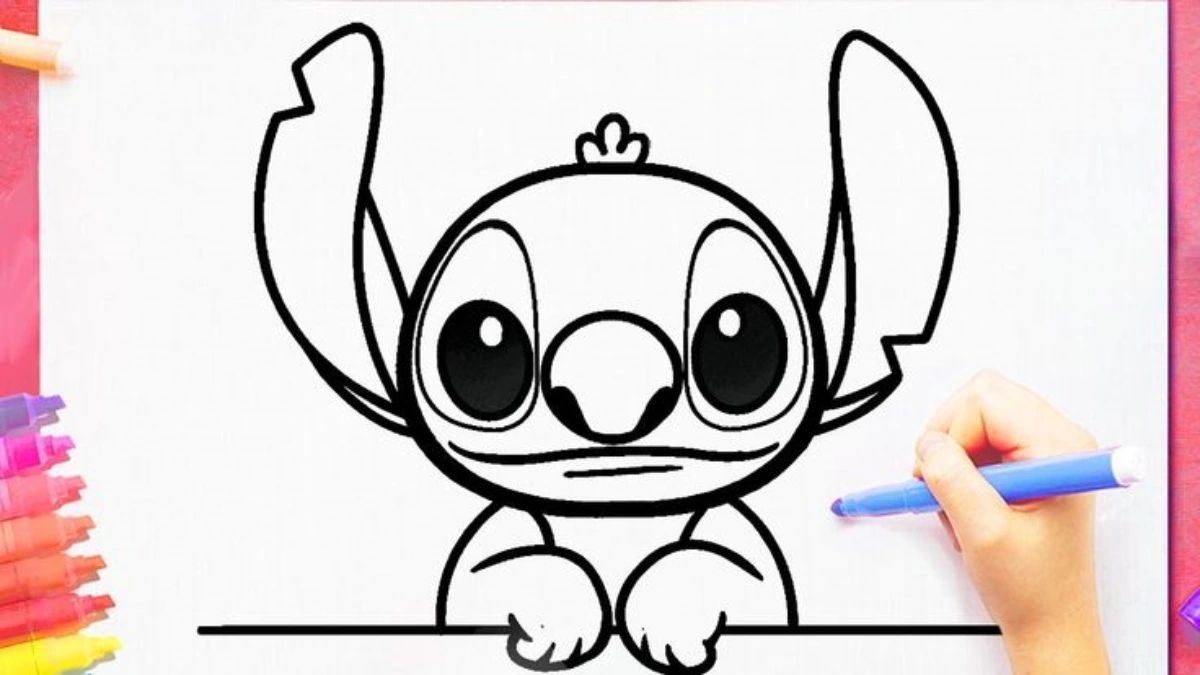
If you’ve ever sat down to draw Stitch and ended up with something that “almost” looks right, you’re not alone. The easiest way to learn how to draw stitch is to start with simple rounded shapes, build the proportions carefully, and add the recognizable facial and body details afterward.
This guide walks through how to draw stitch step by step, then answers the questions beginners commonly have about ears, facial expressions, body proportions, extra arms, coloring, and easier versions for kids.
Where Do I Start?
Start with shapes, not details. Stitch’s whole body breaks down into an oval for the head, a slightly larger rounded shape for the body, and thin tapering ovals for the limbs. Sketch these loosely in pencil before worrying about ears, eyes, or color.
Keep the head a little smaller than the body, since Stitch has a compact, koala-like build rather than a tall or lanky one. Leave plenty of room above the head because his ears take up a lot of visual space.
How to Draw Stitch Step by Step
If you’re learning how to draw stitch for the first time, don’t try to complete the character in one pass. Build the drawing from large shapes to small details.
Step 1: Sketch the Head and Body
Begin with a rounded oval for the head. Underneath it, add a slightly larger rounded shape for the body.
Keep both shapes loose at first. These are construction lines, so they don’t need to be perfect. The goal is to establish Stitch’s compact proportions before adding details.
Step 2: Add the Large Ears
Stitch’s ears are one of the most recognizable parts of his design.
Draw two large ears rising from the top of the head. They should curve upward and slightly outward rather than stand straight. The ears are nearly as tall as the head, so avoid making them too small.
A light guideline across the head can help you keep both ears balanced and symmetrical.
Step 3: Build the Face
Next, add Stitch’s large oval eyes close together, positioned just below the center guideline.
Add a small dark nose beneath the eyes. Then draw a wide mouth with a soft pink interior and a couple of small teeth for his mischievous grin.
The eyes and mouth do most of the work when it comes to making the expression recognizable, so take your time with their placement.
Step 4: Shape the Body
Keep the body short and rounded rather than stretched.
Draw a rounded body beneath the head, tapering slightly at the neck. Then sketch two short arms and two short legs.
The compact silhouette is important. If the limbs become too long, Stitch can quickly start to look like a different character.
Step 5: Add the Paws, Tail, and Other Details
Give the arms small clawed paws and the legs simple feet. Keep the tail short and curved rather than long.
If you’re drawing Stitch in his full alien form, you can also include his second, smaller pair of arms and the small spines running down his back.
Stitch, also known as Experiment 626, normally keeps these features retracted when he is passing as an ordinary dog.
Step 6: Add the Antennae
The antennae sit between the ears. Draw them as two thin, slightly curved lines with rounded tips.
Like his extra arms, Stitch can retract his antennae, so leaving them out is appropriate when you’re drawing his classic disguised look.
Step 7: Clean Up the Outline
Once you’re happy with the proportions, erase unnecessary construction lines.
Use a black fine-tip marker or pen to trace the main outline. Keep the facial features clean and make sure the ears, paws, and body silhouette remain easy to recognize.
Step 8: Add the Colors
Color does a lot of the visual work in how to draw a stitch accurately.
Use bright blue for the main body, light aqua-blue for the belly and eye area, black for the eyes and nose, pink for the inner ears and mouth, and dark blue for the claws.
Add the lighter belly and eye-area color instead of filling the entire character with one shade of blue.
What Supplies Do I Actually Need?
Nothing beyond the basics.
- Plain paper or a sketchbook page
- A pencil for construction lines
- An eraser
- A black fine-tip marker or pen for inking
- Blue, light aqua-blue, pink, and black coloring tools
You don’t need complicated art equipment to follow this tutorial. Basic drawing supplies are enough to build the shapes, clean the outline, and add the main colors.
How Do I Get the Ears Right? Mine Always Look Wrong.
The ears are a common sticking point because they are easy to make too small.
Stitch’s ears are nearly as tall as his head, curving upward and slightly outward rather than standing straight. Draw them big, then shade the outer tips a touch darker than the rest of the fur.
Add a light guideline across the head first so both ears end up symmetrical.
When learning how to draw stitch, getting the ear size right can make a noticeable difference in the overall silhouette.
Why Doesn’t My Face Look Expressive Enough?
Expression comes almost entirely from the eyes and mouth.
Draw two large oval eyes close together, solid black with no visible pupil, positioned just below the center guideline. Close-set eyes give Stitch his wide, alert stare, while spacing them too far apart can change the likeness.
Add a small dark nose beneath the eyes, then a wide mouth line with a soft pink interior and a couple of small teeth for his signature mischievous grin.
How Do I Build the Body Without It Looking Stretched?
Keep everything short and rounded.
Draw a rounded body beneath the head, tapering slightly at the neck, then add two short arms ending in small clawed paws and two short legs with the same proportions.
The moment limbs get elongated, the compact silhouette that defines Stitch starts to disappear. Resist the urge to stretch things out for “action” poses until you’ve nailed the basic proportions.
Wait, Does Stitch Actually Have More Than Two Arms?
Yes. In his true alien form, Stitch, also known as Experiment 626, has a second, smaller pair of arms tucked beneath the main ones, along with a few small spines running down his back.
He normally keeps these retracted so he can pass as an ordinary dog.
Drawing him with just two arms or with the full four-armed, spined version are both accurate options, depending on which version of him you want to capture.
What About the Tail and Antennae?
The tail is short and curved rather than long, so keep it compact against the back of the body.
The antennae sit between the ears and can be drawn as two thin, slightly curved lines with rounded tips. Like his extra arms, Stitch can retract his antennae, so it’s fine to leave them out if you’re drawing his classic disguised look.
How Do I Make the Coloring Actually Look Accurate?
Color does a lot of heavy lifting here, arguably as much as the shapes themselves.
| Area | Color | Notes |
| Main body | Bright blue | Primary fur tone |
| Belly and eye area | Light aqua-blue | Softer countershading, not the same shade as the main coat |
| Eyes and nose | Black | Gives the sharpest contrast and alert look |
| Inner ears and mouth | Pink | Adds warmth and finish |
| Claws | Dark blue | Small detail that completes the paws |
Skipping the lighter belly tone is one of the most common coloring mistakes, since a flat single-blue fill makes the drawing look noticeably less accurate.
My Drawing Still Looks Off. What Am I Missing?
Before starting the entire drawing again, run through this quick checklist:
- Are the ears large enough, close to the height of the head?
- Are the eyes close together rather than spaced wide?
- Are the limbs short and stubby, not elongated?
- Did you add the lighter aqua countershading, not just flat blue?
- Are the pink ear and mouth interiors included?
Most “almost right” drawings can be improved by adjusting one or two of these points rather than starting over.
Is There an Easier Version for Kids or First-Timers?
Yes. If you’re looking for an easier approach to how to draw stitch, simplify everything to four main shapes:
- One oval for the head
- One rounded shape for the body
- Two tall curved ears
- Simple stick limbs ending in small paw shapes
Then add two dot eyes, a small nose, and a curved mouth line.
This keeps Stitch recognizable while skipping the precision required for the fuller version. It’s a useful starting point before attempting the complete method above.
Was Stitch Always This Blue?
No, and it’s a fun bit of production history.
Stitch was originally designed with green fur before the animation team changed his color to blue during development, feeling it made him more appealing on screen.
Final Tips for Drawing Stitch
The easiest way to improve at how to draw stitch is to focus on proportions before details.
Start with the head and body shapes. Make the ears large. Keep the eyes close together and the limbs short. Once the silhouette looks right, add the face, paws, tail, antennae, and coloring.
If the first attempt doesn’t look perfect, don’t redraw everything immediately. Check the ears, eye spacing, limb length, and color areas first. Small proportion changes can make a big difference.
For beginners, the simplified four-shape method is a good place to start. Once those basic shapes feel comfortable, move on to the complete version and experiment with Stitch’s full alien features.
Frequently Asked Questions
Undersized ears or eyes spaced too far apart are two common culprits, since both can shift the proportions away from his recognizable design.
Four, though he typically keeps the second pair and his back spines retracted to look like an ordinary dog.
No. Stitch can retract his antennae just like his extra arms, so both the disguised look and the full alien look can be represented.
Bright blue for the body, light aqua-blue for the belly and eye area, black for the eyes and nose, pink for the inner ears and mouth, and dark blue for the claws.
Yes. His design relies heavily on simple rounded shapes, making the basic version approachable for beginners. Starting with the head, body, ears, and simple limbs can make the process easier.
Yes. A four-shape version using a head oval, body shape, tall ears, and simple limbs keeps him recognizable without requiring exact proportions.
It’s a small touch, but skipping it can make an otherwise accurate drawing look unfinished. The pink areas add contrast and help complete the character’s familiar appearance.
No. His original concept design used green fur before it was changed to blue during the film’s development.