
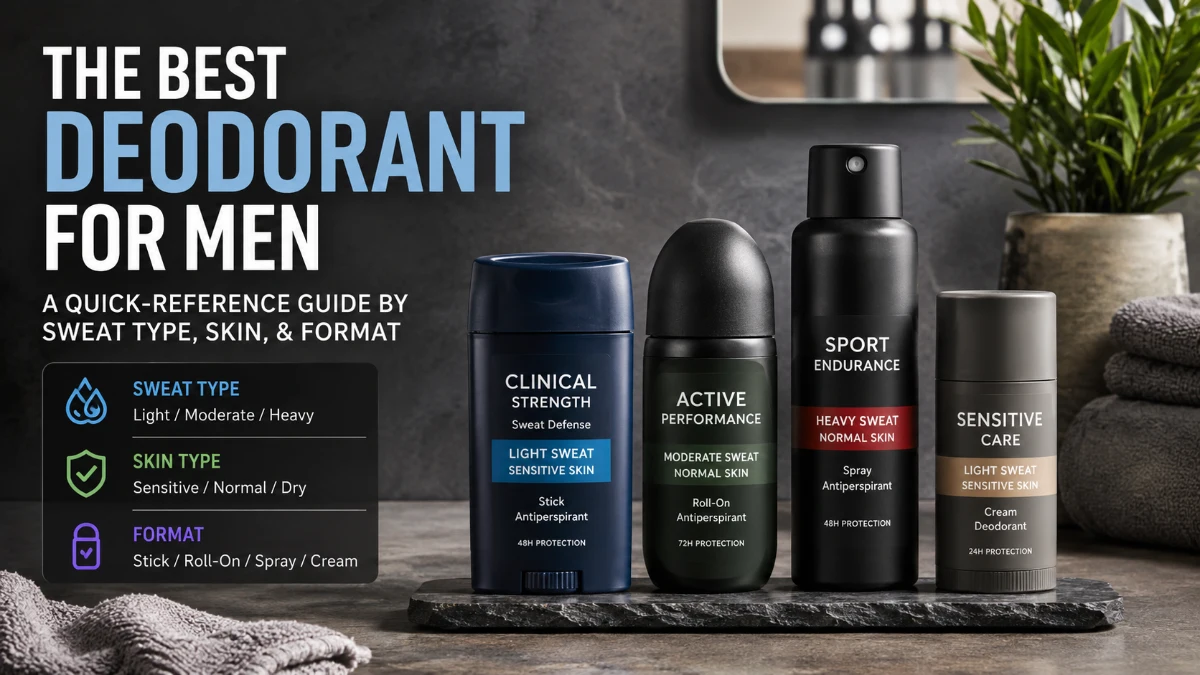
Finding the best deodorant for men usually comes down to three variables: how much you sweat, how sensitive your skin is, and which format fits your routine. Here’s a quick-reference breakdown before the details.
| If your priority is… | Look for… | Best format match |
| Stopping heavy sweat | Antiperspirant with aluminum chlorohydrate or zirconium | Stick or roll-on for controlled dosing |
| Odor control without sweat reduction | Deodorant with bacteria-fighting ingredients | Spray or stick |
| Sensitive skin | Baking-soda-free, fragrance-free formulas | Roll-on or cream |
| Natural/aluminum-free preference | Odor-neutralizing acids (mandelic, citric) or probiotics | Stick or cream |
| Hot, humid climates | Fast-drying, lightweight formula | Spray |
Deodorant vs. Antiperspirant, in One Line Each
Deodorant kills odor-causing bacteria and masks scent with fragrance; it does not reduce sweat. Antiperspirant contains aluminum-based compounds that physically block the sweat duct, reducing perspiration itself. Most products marketed as the best deodorant for men are actually antiperspirant-deodorant hybrids that combine both functions — check the label for an aluminum compound if sweat control matters to you, not just odor.
Choosing by Sweat and Skin Type
Independent testing outlets don’t converge on a single “best overall” pick — some favor aluminum-free acid-based formulas for odor control, others favor higher-concentration antiperspirants for heavy sweat. That’s less a gap than a signal: the best deodorant for men depends on matching ingredients to your profile rather than defaulting to whichever product tops a generic ranking.
For heavy sweating, antiperspirant sticks or roll-ons with aluminum chlorohydrate deliver the most consistent dose of active ingredient directly to the skin. For sensitive skin, baking-soda-free and fragrance-free formulas reduce contact irritation, since alkaline ingredients and added fragrance are the most common irritation triggers. For men preferring aluminum-free options, mandelic acid and probiotic-based formulas control bacteria without blocking sweat glands, though they won’t stop visible sweating the way an antiperspirant will. Brand-reported sweat-reduction figures — some claiming above 90% — come from manufacturer clinical testing rather than independent verification, so treat them as directional brand claims, not confirmed universal results.
Format Comparison: Stick, Spray, Roll-On, and Cream
This is where most buying guides get thin, but format genuinely affects how well the best deodorant for men performs in real conditions, not just how it feels going on.
- Stick: Delivers a consistent, controlled dose of active ingredient and travels well without leaking; the main drawback is a slower dry time before dressing and occasional residue on dark clothing
- Spray: Dries fastest, gives a cooling sensation useful in hot or humid climates, and avoids visible white marks on clothing; delivers a less concentrated dose per application and works best for broad coverage
- Roll-on: Applies with less friction, making it a common recommendation for sensitive skin, and delivers active ingredient directly to the treated area; needs a short drying window before dressing
- Cream: Suits dry or sensitive skin well and is often recommended after shaving, but requires finger application and carries more staining risk if not applied carefully
If you live somewhere hot and humid, a fast-drying spray or lightweight stick generally performs more comfortably than a cream. If your priority is targeted sweat control rather than broad coverage, a roll-on or stick puts more active ingredient exactly where it’s needed.
Application Timing, Briefly
One habit changes results more than switching products: apply antiperspirant at night on clean, dry skin rather than in the morning. Sweat glands are less active overnight, giving the aluminum-based compound time to settle into the duct before daytime sweat and showering wash it away. One or two swipes is enough — more product doesn’t improve results and raises irritation risk.
Is Aluminum Actually a Safety Concern
Not based on current evidence. Major toxicology reviews and statements from the American Cancer Society have found no convincing link between aluminum-based antiperspirants and cancer, and skin absorption is minimal — newer, better-controlled research has revised absorption estimates even lower than older studies suggested. The legitimate reason to avoid aluminum isn’t safety; it’s personal sensitivity, since some men do experience irritation from aluminum salts or from baking-soda-based natural alternatives.
Frequently Asked Questions
An antiperspirant stick or roll-on containing aluminum chlorohydrate or aluminum zirconium, since these directly block sweat ducts rather than just masking odor.
Neither is universally better — spray dries faster and suits hot, humid climates, while sticks deliver a more controlled dose and travel more reliably without leaking.
Yes. Roll-ons and creams apply with less friction and suit sensitive skin, while sticks and sprays generally deliver more consistent coverage for daily use.
No. Deodorant masks and neutralizes odor, while antiperspirant reduces sweat by blocking sweat ducts with aluminum-based compounds.
At night, on clean, dry skin, sweat glands are less active overnight, and the active ingredient has more time to work.
Major scientific reviews have found no convincing link between aluminum-based antiperspirants and cancer, and skin absorption is minimal according to current research.
Baking-soda-free or fragrance-free formulas, often in roll-on or cream format, reduce irritation risk compared to alkaline stick antiperspirants.